
Loading Your Results...
Retrieving your personality analysis.
Retrieving your personality analysis.
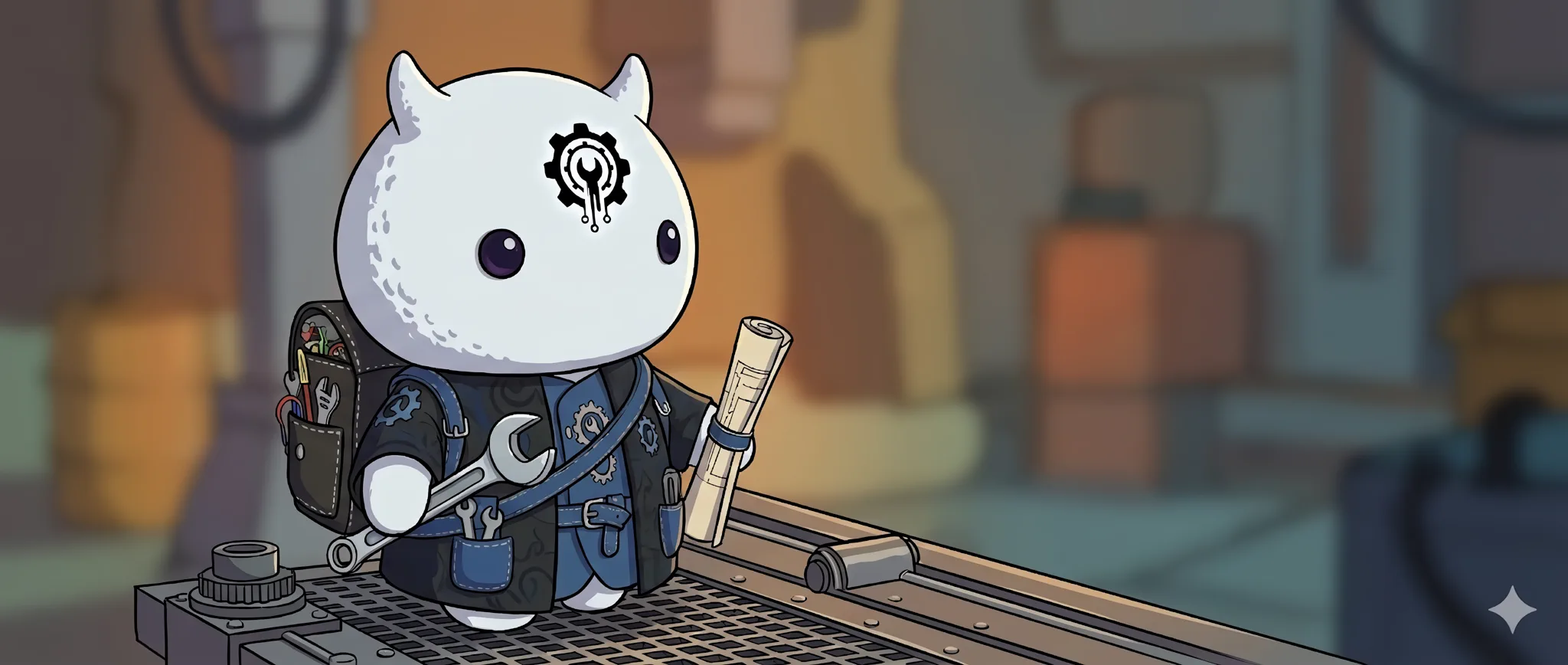
You see the world as a series of problems waiting to be solved—and you're the one who solves them. While others debate ethics or wait for inspiration, you're already three moves ahead, mapping contingencies and exploiting inefficiencies. You notice leverage points that others miss entirely. You're the person people call when everything's on fire, not because you're warm, but because you're effective. What makes you feel alive isn't being loved—it's being indispensable. You thrive when a situation demands someone who can think clearly under pressure and act decisively without sentiment clouding the picture.
Ambition, Power, Strategy, Self-interest
Curiosity, Clarity, Precision, Mastery
Passion, Impulse, Honesty, Risk
Fairness, Responsibility, Order, Boundaries
Belonging, Growth, Patience, Ecology
Famous people like you
Don Draper · Saul Goodman · Anna Wintour
People notice you when something needs to get done. You're the one who cuts through bullshit meetings, identifies the real problem, and executes while everyone else is still debating. Your friends know you as the person who always has a plan—usually a backup plan too. But they also know you can be calculating to the point of coldness, treating relationships like transactions and people like variables. You're not heartless—you're efficient. The gap between solving problems and manipulating outcomes is where you sometimes lose yourself.
You cut through chaos with surgical precision, solving problems others can't even articulate—and making it look effortless.
You become ruthlessly transactional, treating people as obstacles or tools, losing sight of relationships that can't be optimized.
You may confuse being needed with being valued, building dependencies instead of genuine connections.
Daily Mantra
"Effectiveness without humanity is just elegant exploitation."
You're the person organizations turn to when the stakes are high and the path is unclear. While others freeze or flail, you're already dissecting the problem, identifying leverage points, and executing with cold efficiency. Your gift is seeing systems—the hidden rules, the real power dynamics, the gaps between what people say and what actually drives outcomes. In a world full of people who talk about change, you're the one who makes it happen. You don't need applause. You need results.
Crisis
Detach emotionally to assess the situation clearly
Identify the one action that will create the most impact
Execute decisively while others are still processing
Value you create
You become the calm center that holds everything together
Potential tradeoff
People may feel abandoned by your emotional distance in their moment of fear
Negotiation
Map the other party's real interests beneath their stated positions
Create options that give you leverage while appearing generous
Know your walk-away point and mean it
Value you create
You secure outcomes that others would have left on the table
Potential tradeoff
You may optimize the deal at the cost of the relationship
Complexity
Break the system into components and understand their interactions
Find the minimal intervention that produces the maximum shift
Iterate based on results, not theories
Value you create
You solve problems others declare unsolvable
Potential tradeoff
You may miss solutions that require emotional intelligence or soft influence
Competition
Study your competition more thoroughly than they study you
Position yourself where your strengths meet their weaknesses
Play the long game while winning the short one
Value you create
You consistently outmaneuver competitors who underestimate you
Potential tradeoff
You may create enemies you didn't need—winning isn't always worth it
Your greatest gift is also your greatest trap. The same clarity that lets you solve problems can turn every relationship into a transaction. The same strategic mind that builds empires can become so focused on winning that you forget why you wanted to win in the first place. People around you sometimes feel used—not because you're cruel, but because you're efficient. This isn't a flaw—it's the shadow of your effectiveness. The goal isn't to stop solving problems. It's to notice when you've stopped seeing people.
Strong reliance on black energy. Watch for over-application.
Moderate blue presence. Generally balanced.
When You Overuse Black
When Black takes over, ambition becomes isolation. You start treating every interaction as a transaction, calculating what you can extract before considering what you might give. Relationships become positioning; loyalty becomes leverage. You might notice you're winning—but no one's celebrating with you. Trust erodes because people sense they're being managed rather than met. The trap is that self-reliance feels like strength, so you don't see it as a problem until you realize you've built an empire you can't share. Everyone around you is either useful or irrelevant, and the category can change overnight.
When You Overuse Blue
When Blue dominates, analysis becomes paralysis disguised as thoroughness. You gather more data, run more scenarios, anticipate more contingencies—and the window for action quietly closes. Your strategic mind becomes a prison of possibilities, each option with flaws you can't unsee. You might find yourself knowing exactly what to do but unable to commit because some variable remains uncontrolled. The people waiting on you see hesitation dressed up as prudence. Your intelligence becomes the reason nothing happens—because you can always find one more thing to consider.
When You Lack White
When you lack White, there's no floor beneath your pragmatism. You'll do what works without asking whether it's right. Rules feel like constraints for people who can't think strategically. You might find yourself justifying increasingly questionable choices because they're effective, losing track of the principles that would have stopped you. The invitation is to find some lines you won't cross—not because crossing them would fail, but because some things matter more than winning.
When You Lack Green
When you lack Green, connection becomes a blind spot. You build networks but not communities. You have allies but not belonging. The people around you are resources, and you genuinely don't understand why that's a problem. You might notice that your successes feel hollow, your victories oddly lonely. The invitation is to let yourself need people—not for what they can do for you, but because belonging isn't a strategy. Some things can't be optimized.
The Puppet Master
Triggers
Feeling like you're the only competent one in the room
Others making decisions that affect you without consulting you
Situations where direct action is blocked
Patterns
Manipulating outcomes through indirect influence rather than honest persuasion
Withholding information strategically to maintain advantage
Collateral Damage
People stop trusting you even when you're being genuine—your reputation precedes you
Quick Reset
Share one piece of information you were planning to hold back. Notice what happens.
Transactional Tunnel Vision
Triggers
Someone wanting connection without clear utility
Relationships that don't seem to 'go anywhere'
Feeling emotionally vulnerable or exposed
Patterns
Evaluating every relationship by what it provides
Pulling away from connections that don't serve your goals
Collateral Damage
You end up surrounded by allies but no friends—respected but not loved
Quick Reset
Do something genuinely kind for someone who can't help you. Don't tell anyone.
Analysis Fortress
Triggers
High-stakes decisions with incomplete information
Situations where you could fail publicly
Being asked to commit before you feel ready
Patterns
Requesting more data when what you really need is courage
Framing inaction as strategic patience
Collateral Damage
Opportunities die while you perfect your analysis—and you blame the timing
Quick Reset
Set a timer for 10 minutes. Decide before it goes off.
Lone Wolf Lockdown
Triggers
Others failing to meet your standards
Feeling let down by people you depended on
Success that came from doing it yourself
Patterns
Refusing to delegate because 'they'll just mess it up'
Building systems that only you can operate
Collateral Damage
You become a bottleneck for everything—indispensable but exhausted and alone
Quick Reset
Delegate one thing this week. Accept the imperfection.
You read situations for what could be improved. Not out of restlessness, but because you automatically see the gap between how something works and how it could work. A team dynamic, a process, a decision that keeps producing the wrong outcome. You map it without meaning to. The risk is that improvement becomes a substitute for commitment: if you're always refining the system, you're never quite inside it. At some point the understanding has to turn into action, and that means accepting imperfections you can see clearly.
You Notice
You Ask
You Act
Black's ambition gives Blue's analysis a purpose—you're not thinking for thinking's sake, but to win specific outcomes. Your intelligence becomes weaponized.
Blue's analysis tempers Black's impatience—you build sustainable strategies instead of burning relationships for short-term gains. Patience becomes a competitive advantage.
When aligned
You become surgically effective—seeing exactly what needs to happen and having the strategic patience to execute perfectly. This is when you're genuinely dangerous.
When in tension
Black wants to act now while the advantage exists; Blue wants more data before committing. You oscillate between reckless opportunism and strategic paralysis.
Under stress, you might think:
"If I don't control this situation, someone less competent will—and I'll pay for their incompetence."
You connect through usefulness and respect. The people you're closest to are the ones who can match your competence, who don't need to be managed, and who bring something to the table you can't provide yourself. You're loyal in your own way—showing up when it matters, solving problems others can't. But intimacy doesn't come easily. You struggle with vulnerability, with being known for who you are rather than what you provide. The people who love you have learned that your distance isn't rejection—it's protection.
You build relationships based on mutual respect and competence. Partners often appreciate your reliability, your problem-solving, and your ability to stay calm when everything falls apart. But your transactional instincts can make people feel evaluated rather than loved. Healthy relationships require you to show up even when there's no problem to solve—to be present without an agenda.
How You Repair
You repair by solving the problem. You'll analyze what went wrong, propose a fix, and expect to move forward. Dwelling on feelings without actionable outcomes frustrates you. You need to understand that sometimes people need to feel heard before they need solutions.
Click any archetype to learn more
 Best Friend
Shares your core drives with complementary energy
 Nemesis
Operates from opposite drives—friction is likely
 Growth Partner
Strong in green—your blind spot. They complete what you lack
You communicate with precision and efficiency. Every word serves a purpose. People feel respected by your directness but sometimes hurt by your lack of emotional padding. Your voice carries authority because you clearly know what you're talking about—but you may need to slow down for people who process differently.
Requesting Time
Direct
"I need to think through this before committing. Give me until tomorrow."
Softer
"This deserves more consideration than I can give it right now. Can we revisit?"
Setting a Boundary
Direct
"That's not going to work for me. Here's what I can do instead."
Softer
"I want to help, but not in that way. Let me suggest an alternative."
What You Need
Friction Points
How You Show Love
You show love by solving problems—handling the things your partner dreads, protecting them from threats they don't see coming, and building a life that works. Love, for you, is making someone's world more manageable.
How You Need Love
You need a partner who sees through your competence to the person underneath—who values you for who you are, not just what you provide. You need someone who stays even when you're not useful.
Fight Style
You fight strategically—marshaling evidence, staying calm, and arguing to win rather than to connect. You may dismiss emotional arguments as irrational, which escalates rather than resolves. Your tendency to go cold during conflict feels like abandonment to others.
Repair Style
You repair by analyzing what failed and proposing structural fixes. You want to solve the underlying issue so it doesn't recur. But you need to learn that repair often requires emotional acknowledgment before practical solutions.
Seek in Partner
Red Flags
You do your best work when the problem is hard and the stakes are real. The projects that energize you are the ones where your competence directly impacts outcomes—where success requires seeing what others miss and executing when others hesitate. You thrive in meritocracies and struggle in political environments where relationships matter more than results. The right environment respects your autonomy and judges you by outcomes. The wrong one buries you in process and consensus.
The Fixer
You create value by
Solving problems others have given up on or don't see
Underrated at
Knowing which problems are actually worth solving
7-day experiment
Identify one problem you've been solving that would be better not solved at all.
The Architect
You create value by
Building systems that create leverage and compound over time
Underrated at
Seeing five moves ahead while others see one
7-day experiment
Ship something 70% complete. Iterate based on real feedback.
The Operator
You create value by
Executing complex plans with precision under pressure
Underrated at
Staying calm when everything is on fire
7-day experiment
Train someone else to handle one crisis you usually own.
Your growth edge is allowing connection without utility. The relationships that will complete you aren't the ones that make strategic sense—they're the ones that make no sense at all. The people who will see you aren't the ones who need your competence—they're the ones who stay when you have nothing to offer. Growth means risking inefficiency for intimacy. It means letting someone know you when you can't control what they'll do with that knowledge. It means discovering that you're worth something beyond what you provide.
Your tendency to transactionalize relationships leaves you effective but isolated. You might find yourself surrounded by people who respect you but don't really know you. Growth means allowing vulnerability—letting people see your doubts, your fears, the parts of you that can't be leveraged. It means staying in relationships that don't optimize your position. It means discovering that being known is worth more than being needed. When you stop treating connection as strategy, you become someone people actually want to be around—not just someone they need.
Build the foundation with daily micro-habits
“What made these habits easier? What made them harder?”
When You Slip
Notice when: When you notice yourself evaluating a relationship by what it provides
Avoid: Cutting people off because they're not 'useful,' or holding back to maintain leverage
Do instead: Stay in the conversation for five more minutes without an agenda. Let the other person surprise you.
You probably appreciate the data more than most. While others want to be told they're special, you want to see the evidence—the questions that revealed your pattern, the algorithms that calculated your distribution, the math beneath the insight. This section shows how your answers progressively revealed your archetype, which questions had the most diagnostic power, and where you sit in the landscape of all 25 types. This is the machinery behind the profile. For an Operator, understanding the system is part of trusting it.
28.4% of people share your archetype
Tap a question to see the full text
Get notified about new archetypes, features, and insights.