
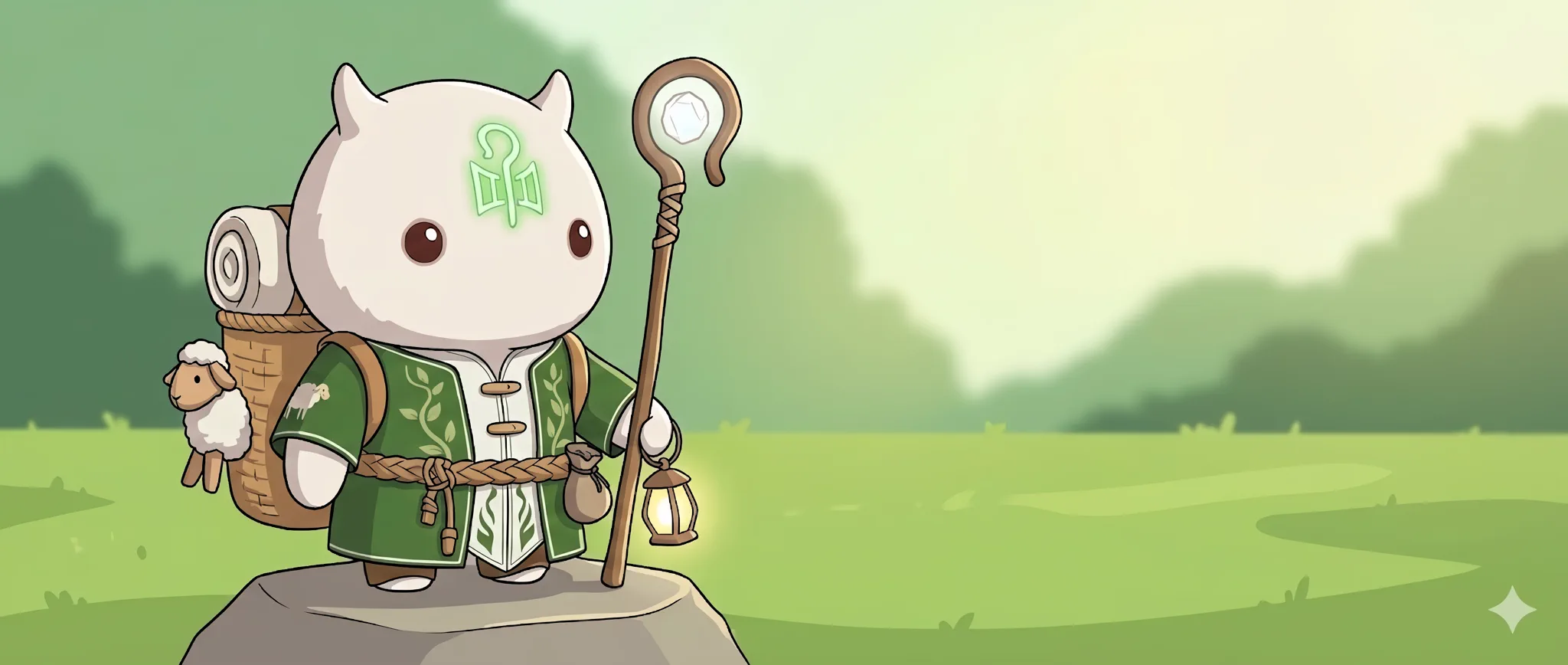
Shepherd
“A flock is only as strong as the care it receives.”
Belonging, Growth, Patience, Ecology
Fairness, Responsibility, Order, Boundaries
Curiosity, Clarity, Precision, Mastery
Ambition, Power, Strategy, Self-interest
Passion, Impulse, Honesty, Risk
Understanding the Shepherd
You create spaces where people feel safe, included, and guided by shared values. You are naturally protective and you tend to step in before problems escalate. You prefer slow and steady solutions that keep everyone connected. You feel most fulfilled when your community or circle feels stable and supported, and when people look to you for gentle guidance.
Dominant Driver
Green is the drive toward connection and organic growth. It shows up in people who think about how things and people fit together over time, who notice the emotional atmosphere in a room, and who care about whether a path feels alive rather than just impressive. This might be the person who tends to friendships like a garden, who values slow, steady progress, or who keeps an eye on whether everyone is actually okay beneath the surface. At its hardest moments, Green can avoid necessary conflict, stay too long in familiar situations, or bend itself around others until it’s not sure what it really wants anymore.
Auxiliary Driver
White is the drive toward principled coherence and fair structure. It shows up in people who naturally organize plans, clarify expectations, and try to make sure everyone is treated consistently. At its best, White creates spaces where others feel safe, respected, and able to rely on shared agreements—whether that’s a project, a household, or a friend group. At its hardest moments, this drive can turn into anxiety about disorder, over-responsibility for other people’s behavior, or resentment when others ignore the rules you’re trying to uphold.
Lacking Driver
When you lack Black, you tend to wait to be chosen, hoping that effort or goodness will eventually be noticed on its own. You stay in unsatisfying situations because you don’t see any real leverage or options, avoid asking directly for what you want, and talk more about what you can’t do than about moves you could try. Saying no, setting terms, or pursuing your own interests feels selfish or dangerous, so your life is often shaped by other people’s decisions.
Lacking Driver
When you lack Red, life starts to feel muted and overly careful. You swallow strong feelings or postpone them, and you make choices mostly to avoid conflict or trouble. Days blur into routines that are ‘fine’ but rarely exciting, relationships stay polite rather than alive, and big desires are often shelved until the moment to act has already passed.
Strengths & Weaknesses
- Builds communities that feel genuinely healthy—values-driven, emotionally safe, rooted in care
- Creates fairness through patient, steady stewardship rather than dramatic intervention
- Nurtures with both empathy and moral clarity; people trust your judgment and your heart
- Provides grounding when everything else feels chaotic—your presence stabilizes
- Neglects your own needs for the sake of the group, running on empty while everyone else thrives
- Overprotects others, solving problems for them instead of letting them learn
- Struggles to enforce boundaries that might disrupt harmony, even when they're necessary
- Absorbs so much responsibility that burnout becomes inevitable